Friday, September 26, 2008

Blog 3 Question 2 Ebooks, eh?

I never really understood the whole deal with Ebooks, I always thought sitting at a computer to read a book would be a pointless, not to mention boring, alternative. My feelings, however, changed drastically when I came to college. I spent about $600 on text books this semester alone! As if I don't already have to pay a load for tuition, room and board, let's add to the financial difficulty and break your back while we're at it!
Seriously, at the end of some days I feel like my back is about to break!

So while I was hesitant at first, I say "BRING ON THE EBOOK!" Save me money and save me from years of doctor visits and medical bills! Hallelujah for the Ebook!


While I'm all for Ebooks for textbooks, my enthusiasm is not so great when it comes to reading an Ebook for pleasure. Now I don't want to sound hypocritical, Ebooks are a wonderful money saver and would decrease the huge load most college students have to carry around. That being said, there's nothing like curling up in bed or by your fireplace with a great paperback! The experience just wouldn't be the same if I was staring at a computer screen reading one of Jane Austin's classics. Money isn't really much of an issue with paperbacks either, I know I'll never drop $112 (yes, that's how much my psychology book cost!) for Pride and Prejudice and if my budget was ever on the line, I could always go check one out from the library. In short, if I want to read for pleasure it's just as easy and convenient for me to grab a paperback; not to mention it makes for a much more pleasurable experience.

I think most individuals feel the same as far as relaxing with a good paperback over an Ebook goes, but I definitely think the Ebook has a future with text books. At some point, someone is bound to put their foot down and realize it's not worth paying $600 for textbooks and instead change to Ebooks. This change may come slow just because right now it's comfortable for us to buy text books, its the "norm". But as tuition continues to climb I think more and more students will be forced to invest in Ebooks as a way to save money. Once they do I think the perks (like not breaking your back walking to class) will become much more evident and Ebooks will spread like wildfire!

Blog 3 Question 1 Read Any Good Books Lately??


After pulling 13 people I found that all, but one individual had read a good book recently. On average people have read 3 in the last 6 months; one individual hadn't read any and another had read 27!
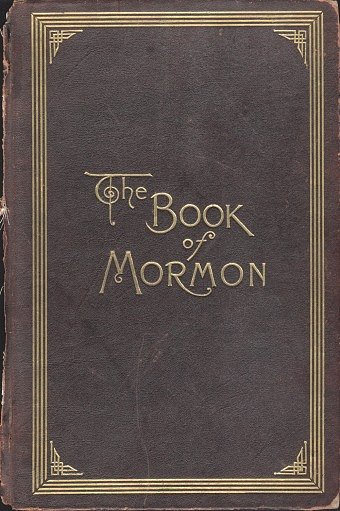
The types of books varied from fiction to editorial, but I did notice a couple trends. A majority of the subject group had read a religious book and the Book of Mormon was high among them. SciFi, fiction and classical books were mentioned several times as well. I was a tad surprised at the variety of books certain individuals had read. I would have expected certain people to have read all SciFi, and others to only have read biographies, but that was definitely not the case.
This tells me that my sample society is a group interested in religion, which doesn't surprise me going to BYU. I would assume that many did it as some sort of preparation for coming to the University and the males sampled are starting to prepare for their missions (most of them I'm sure have been preparing for quite some time already :)
Beyond that it tells me that these individuals are intelligent and well rounded. While I know that all of them attend BYU, if I had not known that I would assume that they were all university students or college bound.

Thursday, September 18, 2008

Blog 2 Question 2 Negative Stereotypes in the Media


Do negative stereotypes exist?

Negative stereotypes definitely exist in the media. When I was a junior in high school I did a project for FCCLA on distorted beauty and found some very interesting and disturbing information. The media portrays women a certain way; they should be beautiful, skinny, have flawless skin and phenomenal hair. These are the images young girls see on a daily basis and the way they believe they should look. This stereotype of woman is hazardous to many individuals and their self esteems and the worst part of it all is that it isn't real! This video will better help you understand what I mean:

http://www.dove.us/#/features/videos/default.aspx[cp-documentid=7049579]/

We're all aware that women wear makeup and even the lighting effects and skin touch ups didn't surprise me, but my gosh they enlarged her lips and eyes, made her neck longer and skinnier and even changed her bone structure! I believe this stereotype of a "perfect women" is far worse than negative. As the number of patients that submit themselves to plastic surgery and girls who develop eating disorders increase, the number of real looking women in the media decreases.


Wednesday, September 17, 2008

Blog 1 Question 1 "Who's Who!?"

Newspaper Article
sender- Journalis; the author of the article and the newspaper company
reciever- Myself, anyone who has a newpaper subscription
channel-paper and paper delivery boys and girls
message-Context of the article
feedback-Letters to the editor
noise-Television, friends, family; any distractions at home

Magazine Article
sender-Journalist, magazine publisherreciever-Subscribers
channel-Mail, news stand, grocier stores
message-Context of the article
feedback-Letter to the editor, Reader response pages
noise-Distractions at home (ie-music, siblings, tv)

Radio Program
sender-Talk show host, Musician
reciever-Anyone who turns the radio on
channel-Radio, specific station
message-Topic being discussed, song lyrics
feedback-Station popularity, album sales
noise- Distractions at home or in the car, commercials

T.V. show
sender-T.V. show producer
reciever-Anyone who turns on their television to watch the program
channel-televison, television station
message- contents of the show-entertainment, informative information
feedback-T.V. show ratings
noise- Distractions at home (ie friends, family, food), commercials

The model is most effective for the newspaper and magazine articles than for the radio program or television show in the sense that the message is straight forward. Whatever is written and in print is the message. When you consider a television program the commercials, which could be classified as a noise, are also a part of the message in the set half hour or hour of time alloted for that specific program. Both models are very effective for feeback which can easily be found by number of sales, letters to the editors and amound of viewers.